Unabhängige Prüfinstitute steuern still die Software-Integrität mobiler Casino-Systeme weltweit
Alex Griffin · Jul 26, 2026

Unabhängige Prüfinstitute steuern still die Software-Integrität mobiler Casino-Systeme weltweit
Independent laboratories have established themselves as central actors in the certification of mobile casino software, and their evaluations determine whether platforms receive approval for operation across multiple jurisdictions. These institutions conduct standardized tests on random number generators, encryption protocols, and transaction security modules before any release reaches international markets.
Prüfverfahren und technische Standards
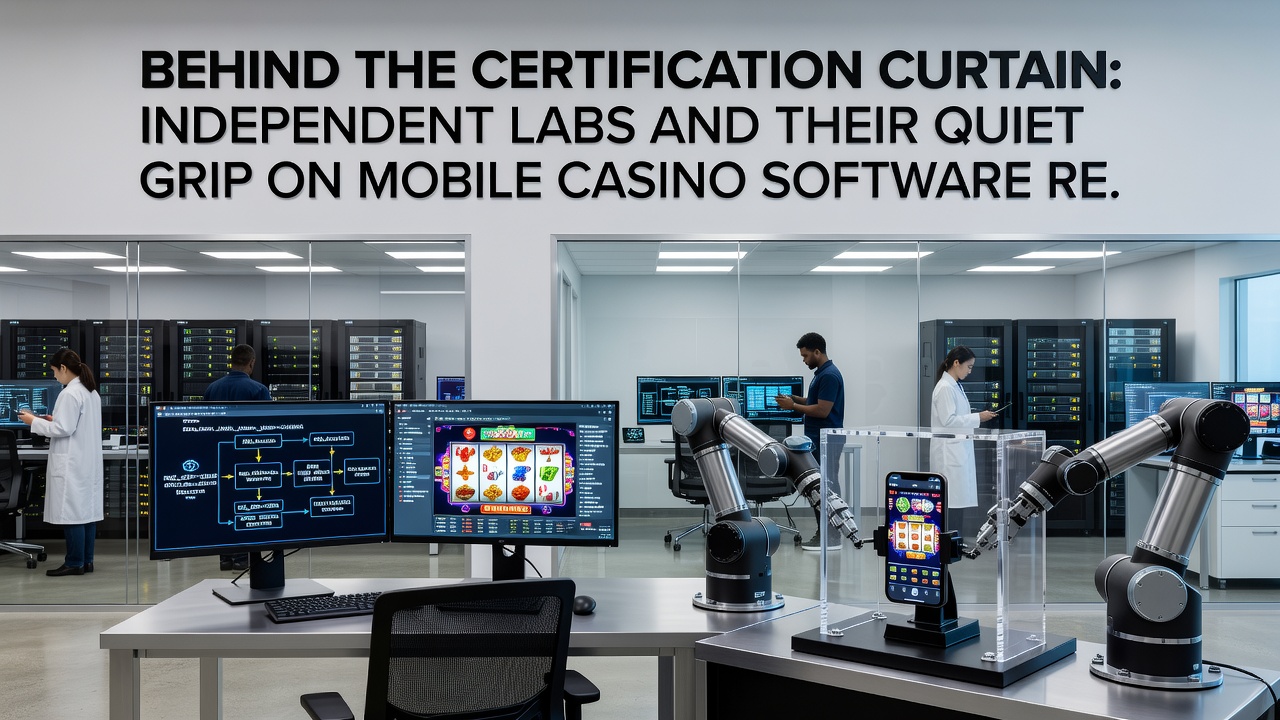
Testing protocols at facilities such as Gaming Laboratories International and iTech Labs include thousands of simulation cycles that verify statistical randomness and detect potential manipulation vectors, while data from July 2026 shows an increase in cross-border certification requests by 18 percent compared with the previous year. Laboratories apply frameworks developed by regional regulators, and software must pass repeated audits when updates alter core algorithms or payment interfaces.
Observers note that mobile-specific requirements now cover latency thresholds, device compatibility matrices, and secure boot processes on Android and iOS operating systems. Certification reports issued after successful completion list every tested component, and operators submit these documents to licensing authorities in different countries to demonstrate compliance.
Grenzüberschreitende Auswirkungen auf die Zuverlässigkeit
Software certified by one laboratory often receives recognition in additional markets because many regulators accept reports from accredited bodies under mutual recognition agreements. This arrangement reduces duplicate testing costs yet requires laboratories to maintain consistent methodologies across diverse legal environments. Research from the University of Nevada Reno indicates that certified RNG modules exhibit failure rates below 0.001 percent in live deployments spanning Europe and North America.
Yet variations persist because some jurisdictions impose additional requirements for responsible gaming features or data localization. Laboratories therefore maintain separate testing suites that incorporate these regional specifications, and updates in one market can trigger re-evaluation cycles for operators active in multiple territories. Figures from iGaming Ontario reveal that 92 percent of mobile platforms licensed in 2025 carried certifications from at least two independent laboratories.
Aktuelle Entwicklungen im Juli 2026
In July 2026 several laboratories introduced enhanced protocols for artificial intelligence components used in fraud detection and bonus allocation systems. These additions address emerging regulatory questions about algorithmic transparency and require operators to provide source code documentation alongside performance metrics. Data compiled by the International Association of Gaming Regulators shows that certification turnaround times averaged 23 working days during the first half of 2026, with mobile applications accounting for 67 percent of submissions.
Cooperation between laboratories and national authorities continues to evolve, and joint working groups now standardize test cases for geolocation services and age verification modules. Such harmonization efforts allow software providers to deploy updates simultaneously across borders while preserving the integrity checks demanded by each market.
Schlussfolgerung
Independent laboratories maintain a decisive yet understated influence on the reliability of mobile casino software through rigorous, repeatable testing regimes that span jurisdictions. Their reports supply the factual basis for regulatory decisions, and ongoing protocol refinements in July 2026 reflect the increasing complexity of cross-border operations. Operators and regulators alike rely on these evaluations to ensure consistent performance standards wherever platforms are accessed.